
How to Choose the Right Overhead Crane System for a Texas Manufacturing Facility

For Texas manufacturers, choosing the right overhead crane starts with five things: what is being lifted, where it needs to move, how often it will be used, how precisely it must be controlled, and how the system will fit into the facility.
1. Start With What the Crane Needs to Do
Before comparing crane models or equipment packages, define the job the crane needs to perform. A few practical questions usually tell you more than starting with a catalog.
Question to answer | Why it matters |
What is being lifted? | The load, shape, and any lifting devices affect how the system should be planned. |
How heavy is it? | Both the typical load and maximum load matter when defining capacity. |
Where does it need to move? | The movement path helps define span, coverage, and whether full-bay coverage is actually needed. |
How often will the crane operate? | A crane used repeatedly in production has different needs from one used occasionally for maintenance. |
How precisely must the load be positioned? | Control, speed, and positioning needs can determine the equipment needed. |
Is this a new facility, expansion, retrofit, or replacement? | The project type affects how the crane must work with the existing or planned building. |
2. Match the Crane Type to the Job
Once the lifting need is clear, the next step is matching it to the right crane type.
Coverage, available space, load requirements, and the building all help narrow the options.
Where Demag Fits Into the Crane Selection Process
Based in Austin, Texas, Norbac III International Co. is listed in Demag’s official distributor network. We work with Demag overhead cranes, hoists, rail systems, controls, and related material-handling equipment for manufacturing projects.
We start with what the facility needs the crane to do. Depending on the project, that may lead to a Demag V-Type Crane, a traditional overhead crane, a KBK Light Crane System, a monorail, or a Demag hoist and control package.
Lifting need | Crane types to evaluate |
Overhead coverage across a larger production area | Demag single-girder or double-girder overhead cranes; top-running or suspended systems depending on the facility. |
Movement within a smaller, defined work area | Demag KBK light crane and rail systems may be worth evaluating. |
Movement along a defined path | A Demag KBK monorail or another monorail system may fit the process. |
Facility-specific or specialized lifting need | Demag hoists, controls, gantry, semi-gantry, or other material-handling systems may be part of the solution. |

Explore the Demag V-Type Crane or browse Universal Overhead Cranes.

3. Make Sure the Crane Fits the Facility
After the lifting need and crane type are defined, confirm that the system can work within the building. Hook height, runway/support requirements, utilities, obstructions, and future facility plans can all affect the design.
Factor | What to evaluate |
Hook height | Required lifting height and the available overhead space. |
Building and runway | Existing structure, runway/support needs, electrical access, and surrounding equipment. |
Overhead space | Roof structure, utilities, lighting, and other obstructions around the crane path. |
Facility plan | For new buildings or major expansions, crane requirements should be coordinated early with the structure and production layout. |
4. Look at the Entire Crane Project, Not Just the Equipment
Crane selection is only one part of getting a system into operation.
Depending on the project, engineering, runway/support planning, electrical work, installation, testing, and facility coordination may also need to be included in the project scope.
The project scope can include:
Application planning and system design
Choosing the crane and hoist
Planning the runway and support structure
Controls and electrical systems
Equipment supply and freight
Installation and coordination with the facility
Testing and final handoff
5. Real Overhead Crane Applications in Texas Manufacturing
Norbac's Texas projects show how different requirements lead to very different crane and hoist solutions.
Electric Vehicle Manufacturer in Austin: Synchronized Demag Hoists
At an electric vehicle manufacturer's Austin facility, we supplied two synchronized Demag hoists used with a custom device for battery handling. The project required coordinated lifting and precise load handling.
Specialized lifting and control requirements can change the equipment needed even when the basic task still sounds like “lift and move a load.”
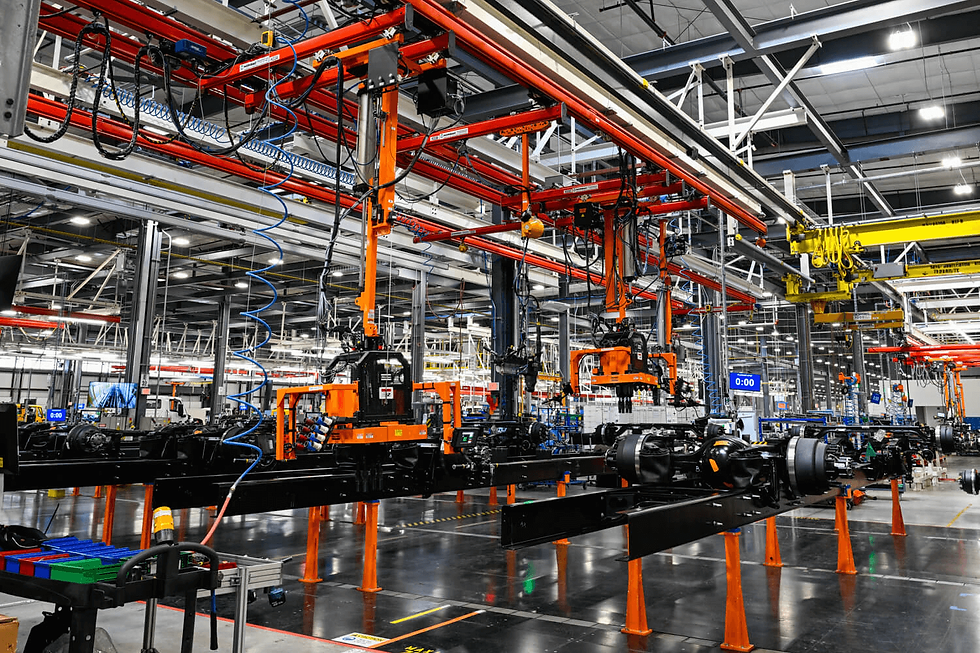
Truck Manufacturer in San Antonio: 100+ Rail and Hoist Systems
At a truck manufacturer's San Antonio facility, we designed, engineered, supplied, installed, and tested more than 100 rail and hoist systems as part of a turnkey project for the new truck manufacturing facility.
On a larger facility project, the crane system has to be coordinated with the building, installation plan, and production environment from the beginning.

6. What to Have Ready Before Discussing an Overhead Crane Project
To start evaluating a crane project, the most useful information is:
What is being lifted
Maximum and typical load
Where the load needs to move
Approximate span or coverage area
Required hook height
How often the crane will be used
Building drawings or dimensions
Available power, if known
Photos or layout drawings
New facility, expansion, retrofit, or replacement
Desired project timeline
Planning an Overhead Crane Project in Texas?
Norbac is based in Austin and is listed in Demag's distributor network.
We work with Texas manufacturers on crane and material-handling projects involving Demag equipment, system design, supply, installation, testing, and facility coordination.
Tell us what you need to lift, where it needs to move, and what you are planning. We can help define the right next step.
Comments